
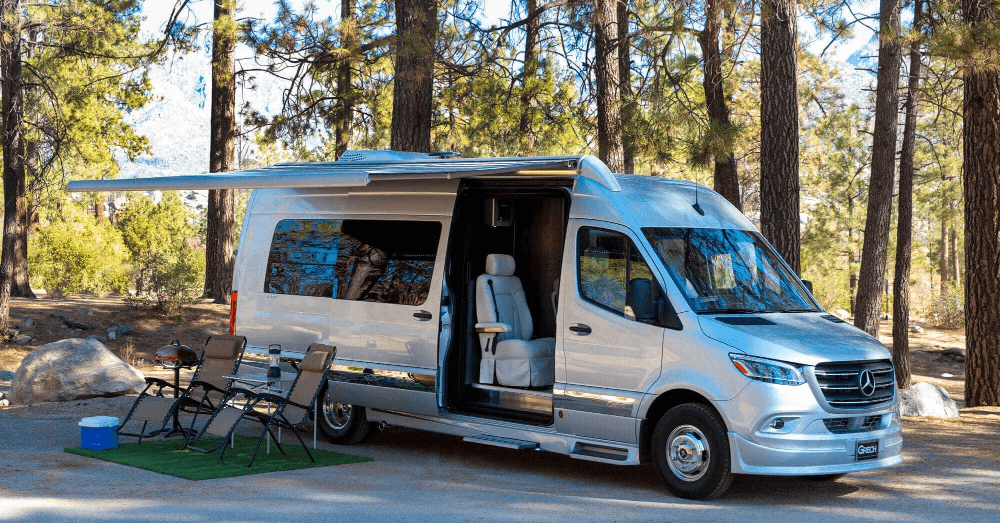
Gas prices are climbing, and camping season is right around the corner. If you’ve been daydreaming about hitting the road this spring, you’re probably weighing your options between a travel trailer and a camper van. And with the Mercedes-Benz Sprinter sitting at the center of the van life movement, that comparison deserves a fresh look in 2026, especially given what’s happening at the pump.
- A Mercedes RV van built on the Sprinter platform averages 15 to 18 MPG with a full camper conversion, compared to 8 to 12 MPG for most motorhomes and tow setups.
- The national average for a gallon of regular gas hit $3.88 in mid-March 2026, with diesel prices staying above $4 nearly everywhere.
- Camper vans offer lower operating costs and greater freedom of movement, while travel trailers win on living space and initial purchase price.
What’s Happening With Fuel Prices Right Now
Spring 2026 is not a friendly time for anyone filling up a tank. Oil prices surged to over $115 per barrel on the international market, and the average cost of a gallon of regular unleaded has climbed from $3.48 to $3.88. Prices at the pump climbed by 28 cents in just one week as the spring equinox arrived.
California holds the top spot for the most expensive gas in the country, with a gallon costing $5.34. Kansas currently has the cheapest gas, averaging around $3.15 per gallon. And if you drive a diesel, good luck finding anything under $4 per gallon, no matter where you are.
That kind of spread makes your choice of camping rig a real financial decision, too.
Why the Sprinter Camper Van Makes a Strong Case
The Mercedes-Benz Sprinter has been the go-to platform for camper van builds for years, and the numbers still hold up. A converted Sprinter with a full camper build typically gets 15 to 18 MPG with the diesel engine and 13 to 16 MPG with the gas engine. Under the hood, the 2026 model offers a lineup of high-efficiency 2.0L four-cylinder engines, including turbo diesel options paired with a 9-speed automatic transmission tuned for balanced performance on both city streets and highways.
In its most capable form, the Sprinter provides up to 488.1 cubic feet of storage and payloads exceeding 6,800 pounds. Multiple roof heights and wheelbase lengths allow for custom upfitting, whether for shelving, refrigeration, or camper van conversion. The high-roof option gives you about 79 inches of standing height, which is enough for most adults to walk around comfortably inside.
Compare that to towing a travel trailer behind a pickup truck. Towing a camper reduces your truck’s gas mileage by an average of 30 to 40 percent. A typical 4WD pickup gets about 13 to 18 MPG solo, but once you hitch up a trailer, you’re looking at roughly 8 to 12 MPG. At $3.88 per gallon, a 500-mile trip in a tow setup could easily cost $160 to $240 in fuel. That same trip in a diesel Sprinter camper van? Roughly $110 to $130.
The Travel Trailer Advantage (And Its Hidden Costs)
Travel trailers are generally more economical upfront, with models ranging from about $10,000 to $65,000 depending on size and features. A Sprinter camper conversion, on the other hand, can easily run $80,000 to well over $150,000 depending on the build.
Trailers also give you something a van can’t: detachable living space. Once the travel trailer is parked, the truck or SUV can be disconnected, and the personal vehicle will get much better mileage than towing everything around. That’s a real perk for day trips around town or exploring nearby trails.
But those savings aren’t always what they seem. Lightweight trailers often save 10 to 30 percent on purchase price compared to similar van conversions, but owners often report 5 to 15 percent higher fuel use while towing and added maintenance difficulty over a five to ten year ownership period. You also need to factor in the cost of the tow vehicle itself, hitch equipment, and separate insurance.
A van is usually cheaper for full-time living because it has lower fuel costs, fewer systems to maintain, and no need for paid campsites if you rely on stealth parking or boondocking.
Picking the Right Rig for Your Budget
Your ideal setup really comes down to how you camp and how often. If you’re a weekend warrior with a truck already in the driveway and you want plenty of room, a travel trailer still makes a lot of sense. The upfront price is lower, and the living space is hard to beat.
But if you’re planning longer trips, covering serious miles, or you like the freedom of parking anywhere a regular vehicle can fit, a Sprinter-based camper van earns its keep quickly. Campervans can fly under the radar with access to nearly limitless parking options, doubling as a daily driver. They’re comfortable to drive, get great fuel economy, and have no problem fitting into a standard parking spot.
With gas prices unlikely to drop below $3 anytime soon (the EIA projects U.S. gasoline costs for 2026 could average around $3.34 a gallon), fuel efficiency will keep playing a bigger role in camping decisions. The Mercedes RV van platform, with its diesel efficiency and flexible build options, sits in a sweet spot for travelers who want to see more places without burning through their budget at every fuel stop.
